
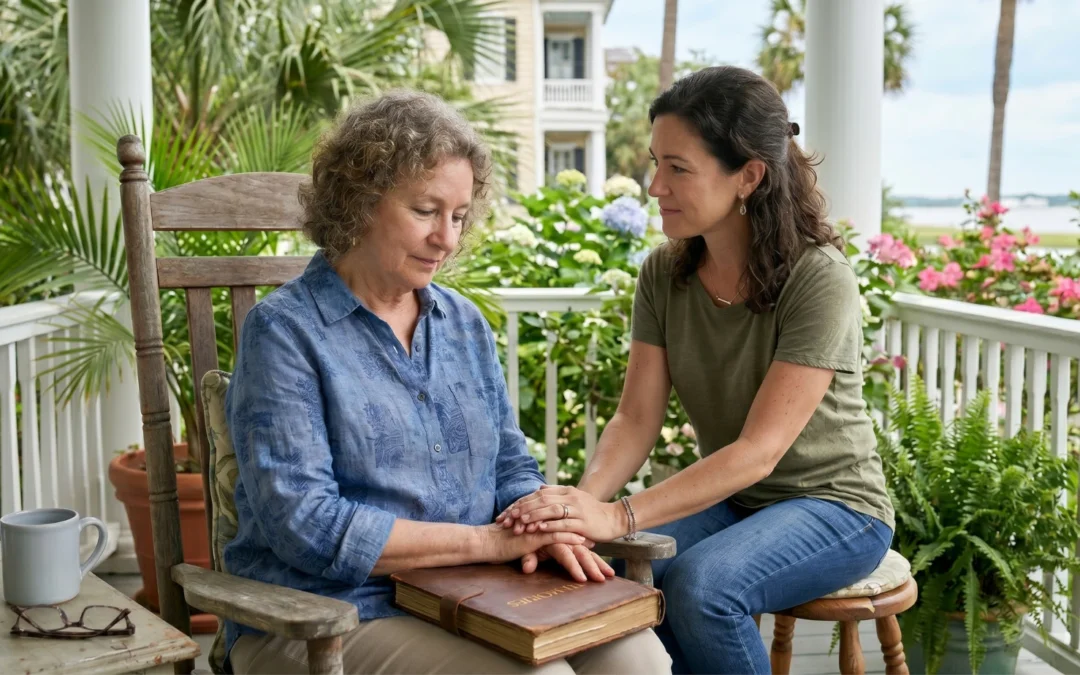
June is Alzheimer’s & Brain Awareness Month, a time to raise awareness of brain health and support the millions of families facing cognitive decline. Here in the Lowcountry, our communities are woven together by deep family ties and shared traditions—from Sunday dinners in Summerville to strolls along the historic streets of Charleston.
When a parent or spouse begins to change, you may feel overwhelmed. It’s completely normal to feel a mix of worry, sadness, or even a little bit of denial. Acknowledging that a loved one needs extra help is a profound act of love, not a failure.
At AllCare Living Services, we believe that understanding the early signs of dementia is the first step toward protecting your loved one’s dignity and restoring your peace of mind.
1. Early Signs of Dementia vs. Normal Aging
It’s easy to shrug off a missed appointment or a misplaced pair of glasses as just “getting older.” However, dementia is not a normal part of aging. Recognizing the difference helps you advocate for your loved one sooner, allowing access to treatments and specialized care that can maintain their quality of life.
Here is how early dementia symptoms compare to typical, age-related changes:
| Signs of Normal Aging | Early Signs of Dementia |
| Forgetting a name or appointment but remembering it later. | Forgetting recently learned information and asking the same question repeatedly. |
| Making a poor financial decision every now and then. | Experiencing persistent trouble managing bills, balancing a checkbook, or tracking household expenses. |
| Needing occasional help to program a microwave or record a TV show. | Struggling with familiar, daily tasks, like following a favorite recipe or driving to the local grocery store. |
| Missing a monthly payment by accident. | Getting disoriented about dates, seasons, or the passage of time. |
| Sometimes struggling to find the exact right word. | Pausing frequently in conversation, substituting incorrect words, or calling objects by the wrong name. |
2. Subtle Shifts to Watch For
Beyond memory loss, dementia often brings subtle emotional and behavioral changes that families notice during visits. Keep an eye out for these three major shifts:
- Social Withdrawal: A senior who used to love community gatherings in Nexton or neighborhood chats may suddenly pull away from hobbies, social projects, or family events because navigating conversations has become exhausting.
- Mood and Personality Changes: Increased anxiety, confusion, suspicion, or becoming easily upset when outside of their comfort zone are common early indicators.
- Spatial and Visual Challenges: Difficulty judging distances, misjudging steps, or having trouble reading can lead to minor accidents or a sudden reluctance to drive.
3. When Is It Time to Consider In-Home Care?
Navigating a dementia or Alzheimer’s diagnosis is a journey no family should have to walk alone. Many families try to manage everything themselves, which frequently leads to caregiver burnout—a state of physical, emotional, and mental exhaustion.
A Note on Caregiver Burnout: Taking care of your well-being isn’t selfish. Ensuring you get rest actually allows you to provide better, more loving support to your senior.
Consider introducing a non-medical in-home care partner if you notice these signs:
- Safety concerns arise: Look for immediate red flags.
If your loved one has begun wandering, forgets to turn off the stove, or is increasingly prone to slips and trips, they require closer supervision than you can safely manage by yourself.
- Medication management becomes difficult: Tracking health needs.
Missing doses or accidentally doubling up on prescriptions can cause serious health complications. Reliable medication reminders help them stay healthy.
- Personal care is neglected: Noticing hygiene shifts.
A decline in grooming, wearing the same clothes for days, or struggling with bathing and dressing safely are clear signs that assistance with activities of daily living (ADLs) is needed.
- The family dynamic feels strained: Balancing love and exhaustion.
If you spend all your time acting as a taskmaster or nurse, you lose the chance to simply be a son, daughter, or spouse. Professional care restores that precious family balance.
How AllCare Living Services Welcomes Your Family
We know that welcoming a caregiver into your home is a deeply personal step. At AllCare Living Services, we focus on making in-home care simple, accessible, and comfortable. Based right here in Summerville, South Carolina, we provide personalized, non-medical dementia and Alzheimer’s care tailored to the unique routines of your loved one.
Whether it’s providing safe transportation to doctor appointments in Charleston, helping with personal care, or simply offering compassionate companionship that keeps their mind active, our caregivers treat your family like our own. We give you the peace of mind that comes from knowing your loved one is safe, dignified, and thriving exactly where they want to be: at home.